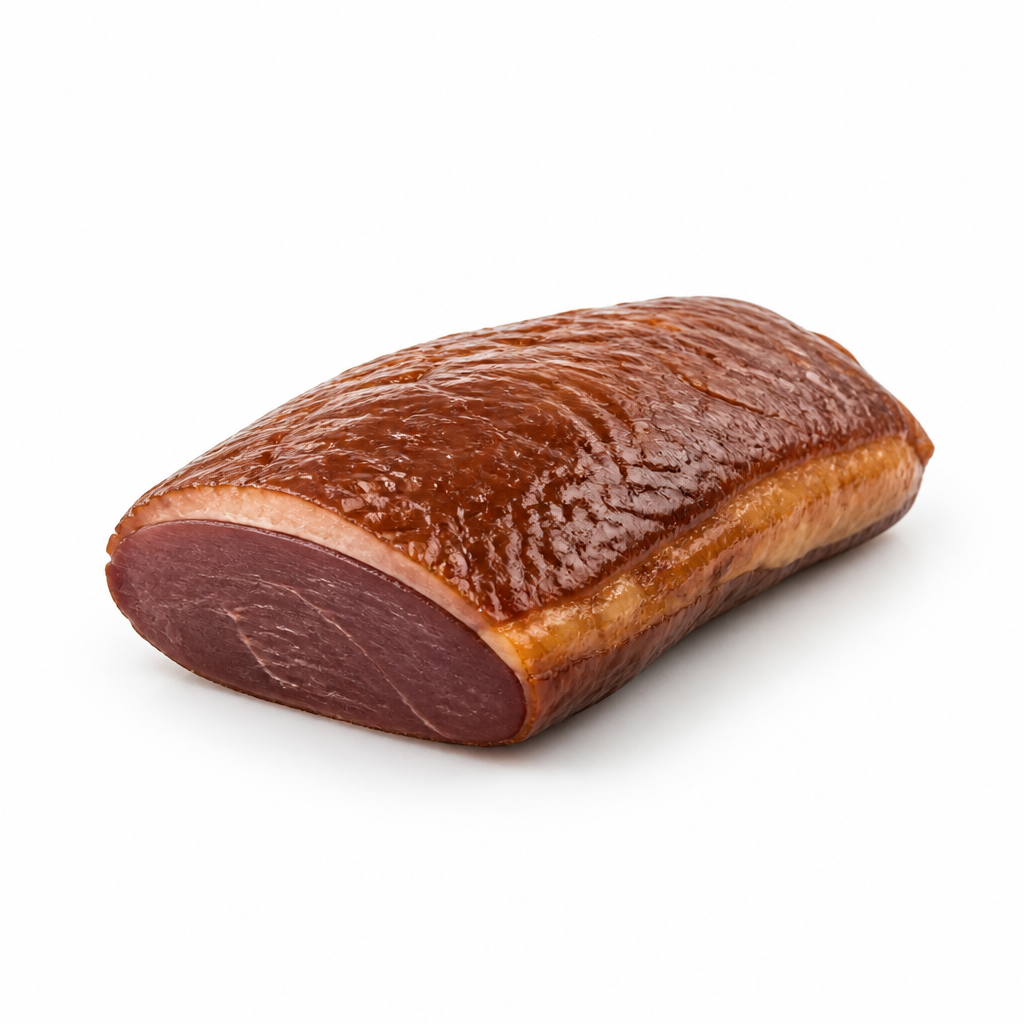
Magret de canard fumé
100 g of Magret de canard fumé provides 287 kcal, with 22.5 g of protein, 0.5 g of carbohydrates and 21.8 g of fat (CIQUAL 2020 table, ANSES).
- High in protein
- Low sugar
- Low sodium
Calories
287 kcal
Protein
22.5 g
Carbohydrates
0.5 g
Fat
21.8 g
Full nutrition table
Values per 100 g of edible portion (CIQUAL 2020).
Macronutrients
| Macronutrients | Value per 100 g | % RI |
|---|---|---|
| Calories | 287 kcal | 14 % |
| Protein | 22.5 g | 45 % |
| Carbohydrates | 0.5 g | 0.2 % |
| Fat | 21.8 g | 31 % |
| Fiber | 0 g | 0 % |
| Sugars | 0.3 g | 0.3 % |
| Sodium | 1.45 mg | 0.1 % |
% RI: share of the daily reference intakes for a typical adult (EU Regulation 1169/2011), computed per 100 g of edible portion.
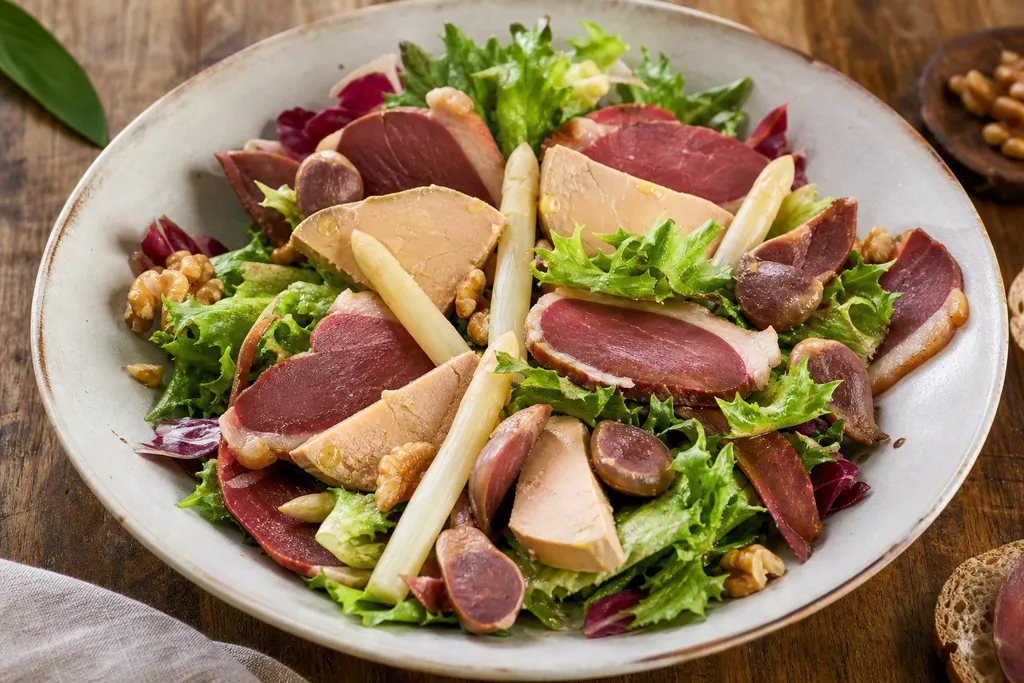
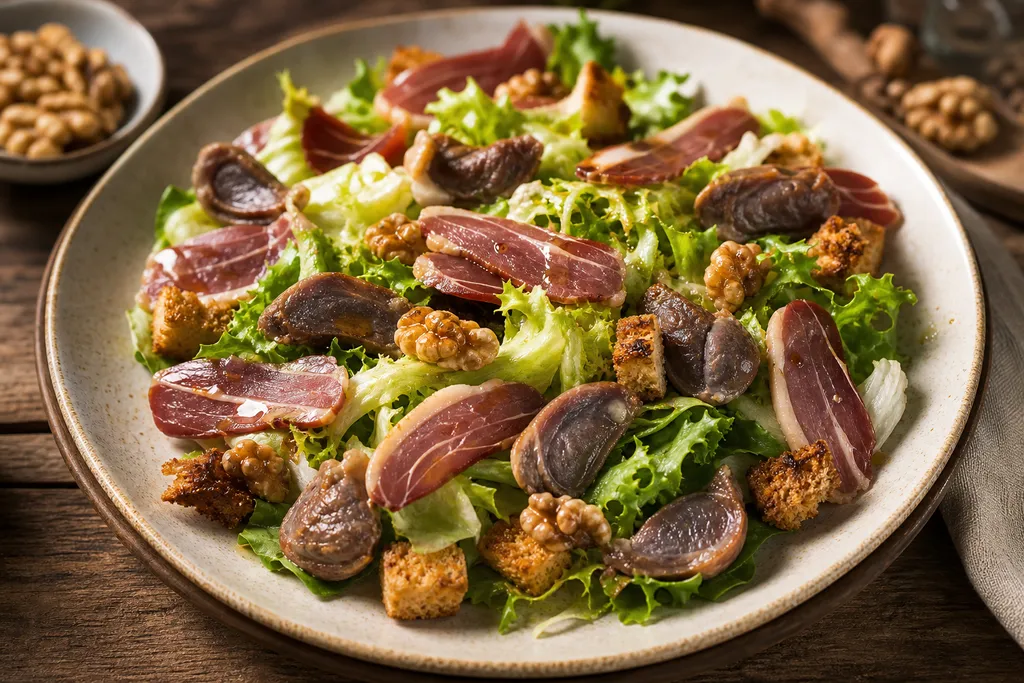
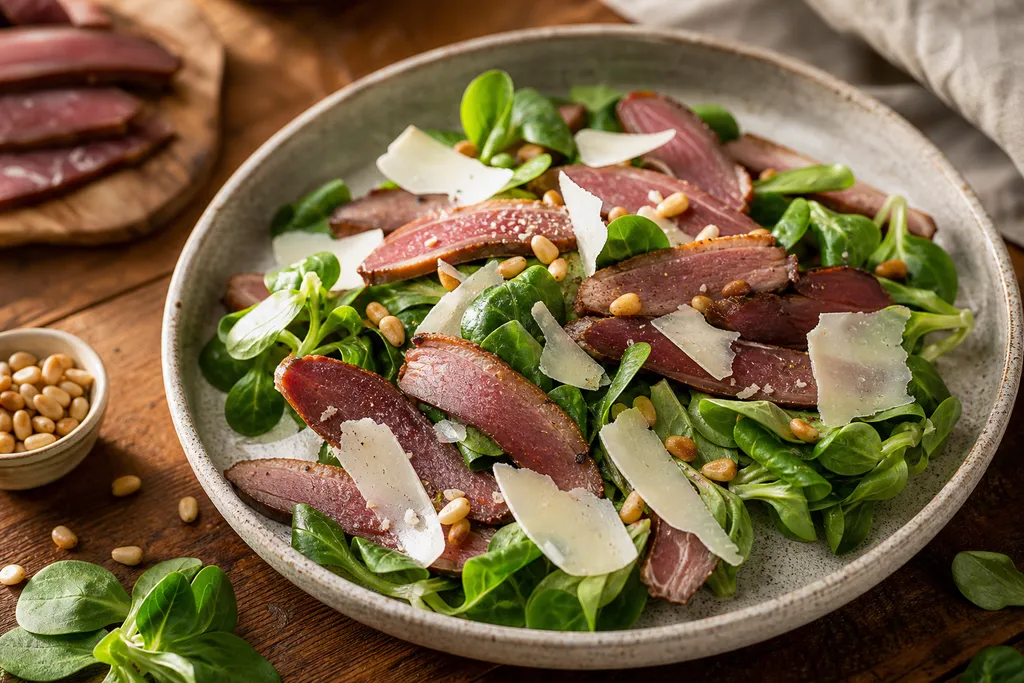
Recipes using Magret de canard fumé
Recipes from the Magic List community that highlight this ingredient.

Frequently asked questions about Magret de canard fumé
How many calories in 100 g of Magret de canard fumé?
100 g of Magret de canard fumé provides 287 kcal, with 22.5 g of protein, 0.5 g of carbohydrates and 21.8 g of fat (edible portion, CIQUAL 2020 table by ANSES).
How much protein in 100 g of Magret de canard fumé?
With 22.5 g of protein per 100 g, more than 20% of the energy of Magret de canard fumé comes from protein: the “high in protein” threshold defined by EU Regulation (EC) 1924/2006.
Which vitamins and minerals does Magret de canard fumé provide?
Per 100 g, Magret de canard fumé does not reach the “source” threshold (15% of reference intakes) for any major micronutrient. The table above lists every measured value.
Where do the nutrition values on this page come from?
Values come from the CIQUAL 2020 composition table published by ANSES, the French food safety agency. They are expressed per 100 g of edible portion and can vary with variety, season and cooking method.
Similar ingredients
Other ingredients in the same family.